Before arriving in Burma I was advised by more than one person that Inle Lake was the place to be. A serene, beautiful lake surrounded by endless marshes, villages of stilted huts and markets. A slower, laid back culture with kind and generous locals, a welcoming community replete with Buddhist monks and monasteries and bargain massages. Shangri-La.
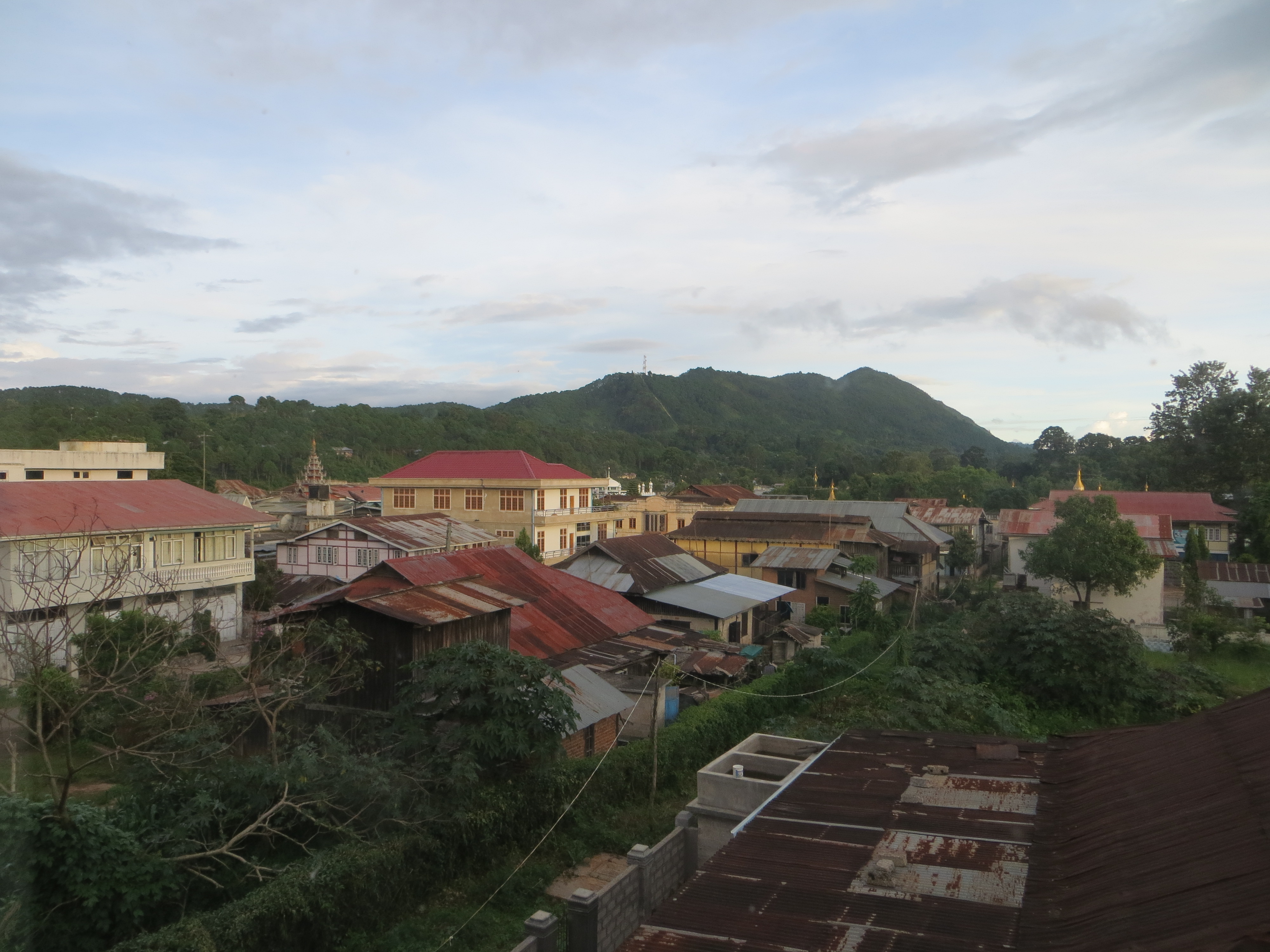
view of Kalaw from the hotel
I learned that it was possible and quite inexpensive to hire a guide in Kalaw and trek to Inle. After a most unpleasant winding 8 hour bus ride, we arrived at last and promptly made arrangements for a three-day, 60 km trek with a Sikh gentleman named Mr. Robin who’d been leading such treks for 20 years.
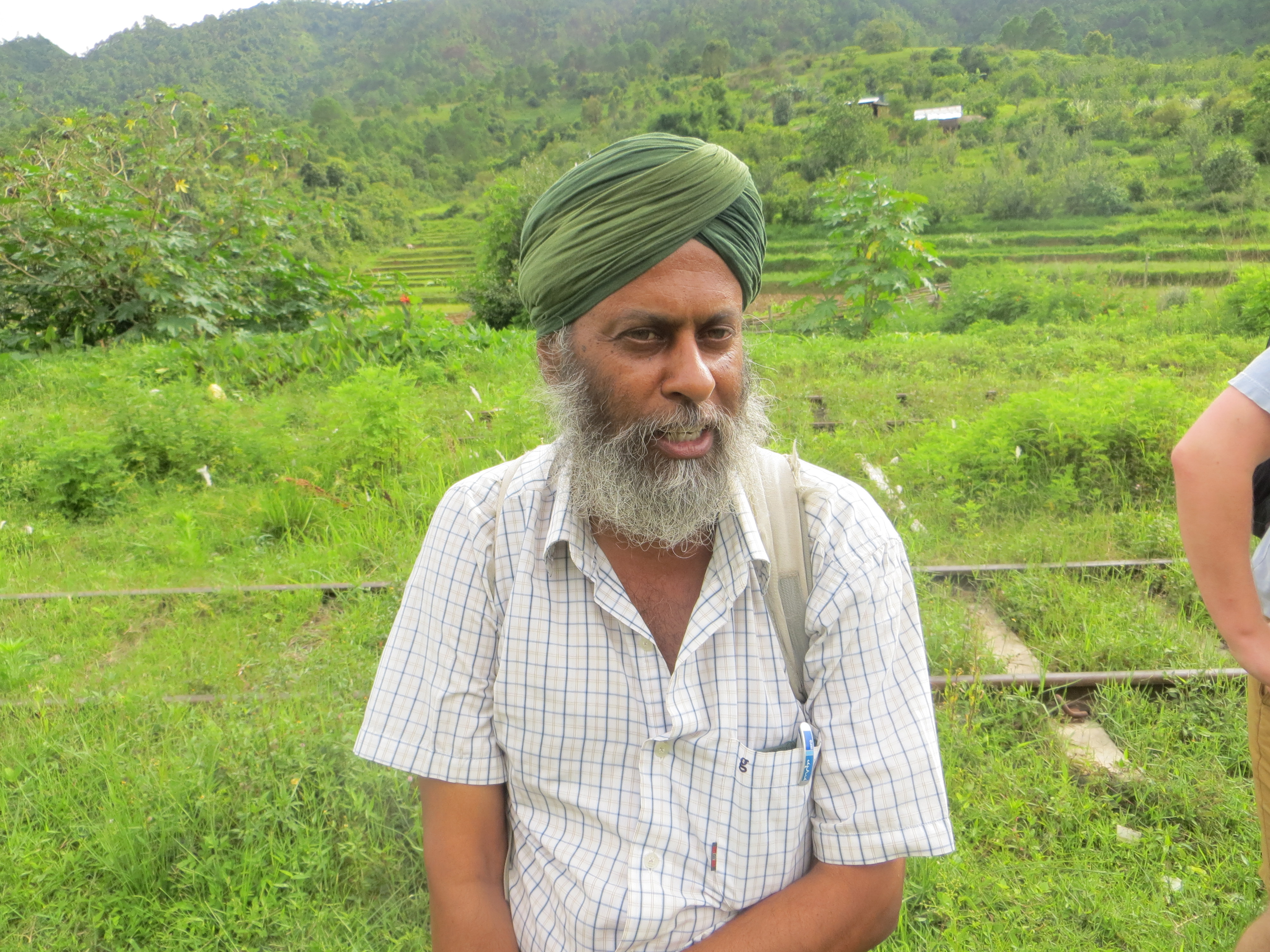
Mr. Robin
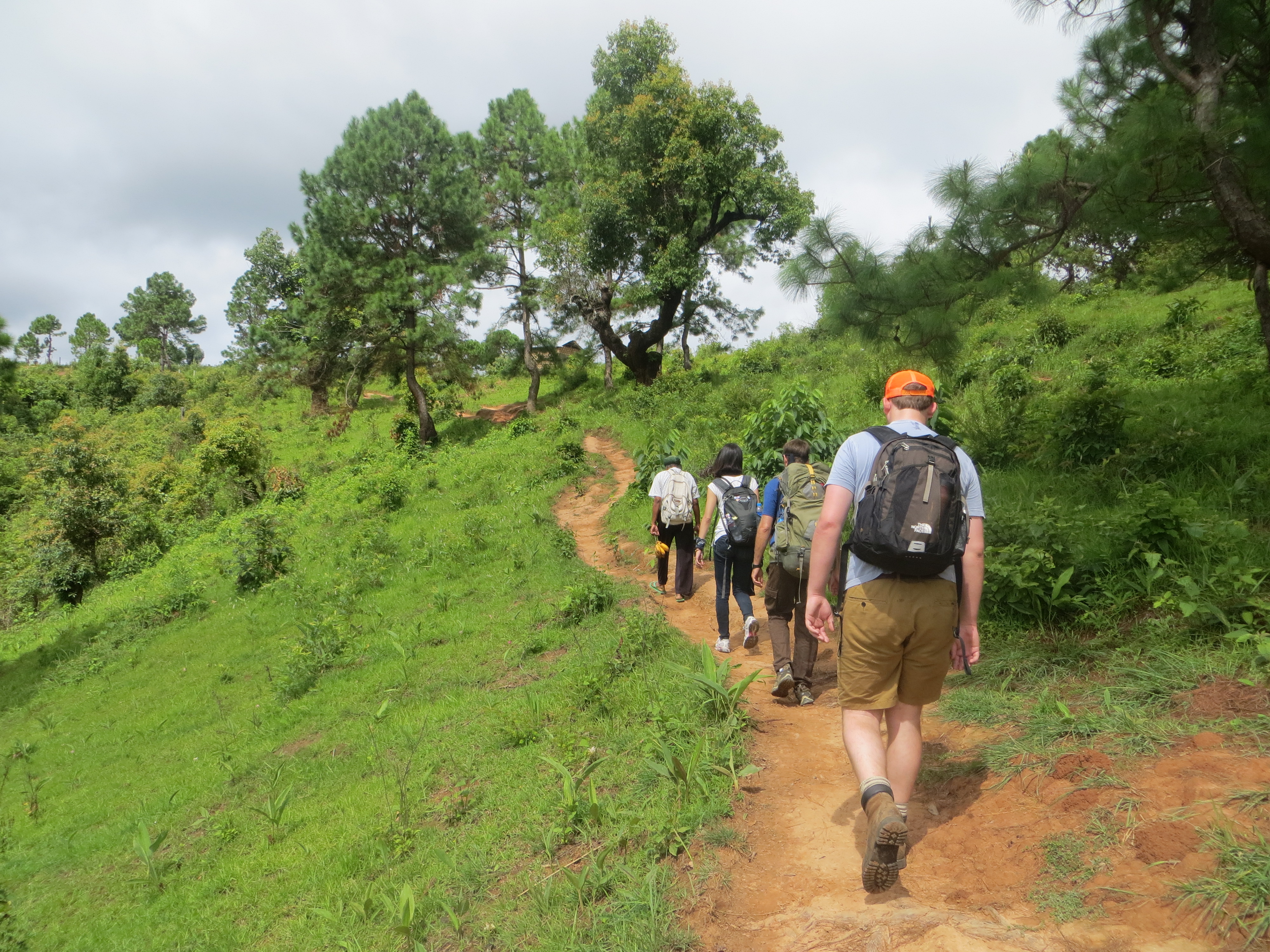
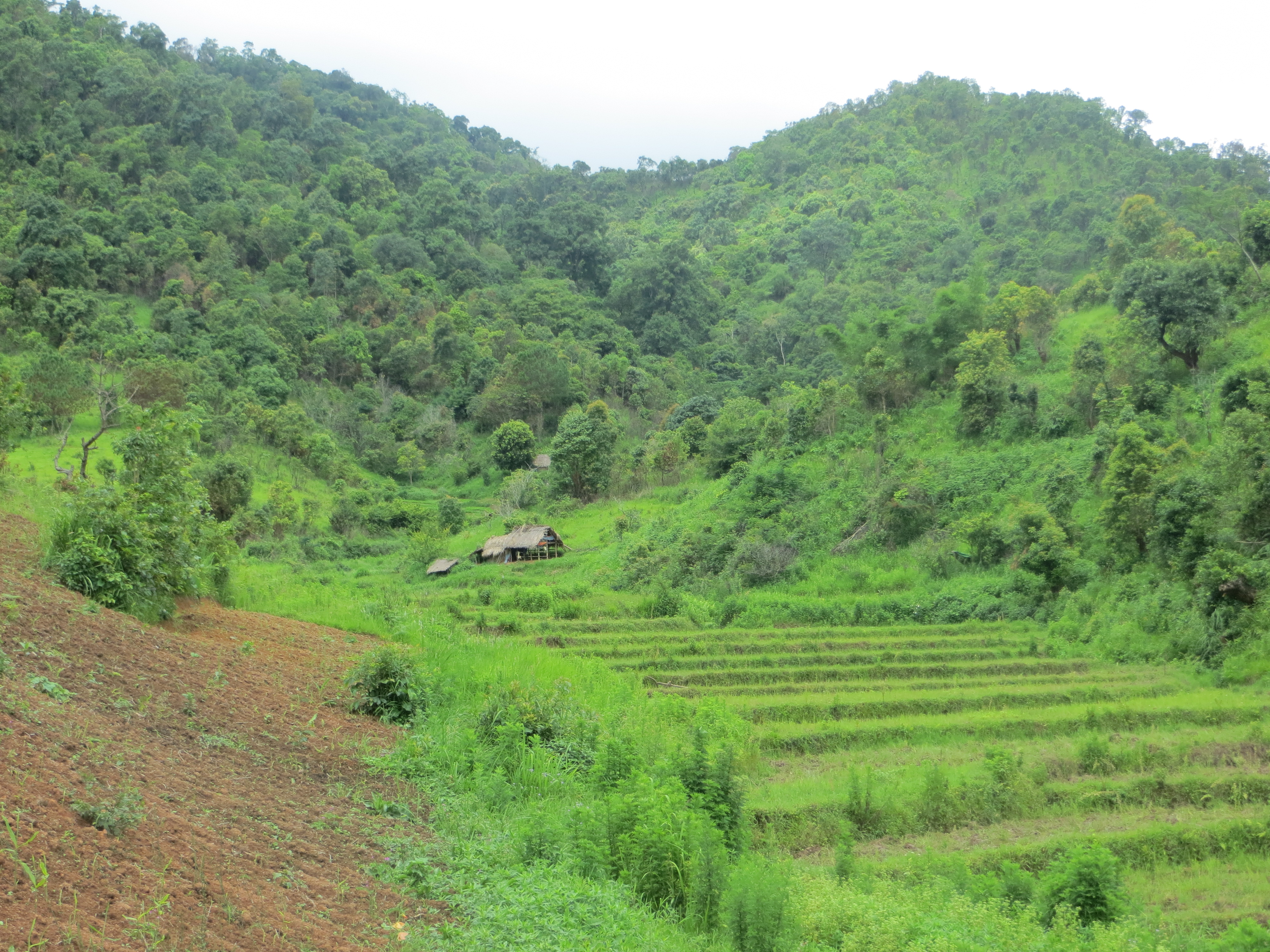
The next morning we set off around 7:30am after eating some delicious Shan noodles. With me was Sara of course, David and Brian who we met in Bagan, and two more fellas named Jon and Paul from Brussels. On the first day, over the trek’s steepest terrain, we hiked 18 km. I could go on and on about the magnificence of the Burmese countryside. The beauty of the rolling hills, hutted villages, and endless farmland dazzled me from start to finish. Burma’s soil is as rich and fertile as any soil on Earth. Plus, this was monsoon season so everything was brilliantly green. The contrast between the rich, red soil and the dark green crops and vegetation was constantly picture worthy, so much so that I have around 300 pictures of landscape through which I am now obliged to sift.

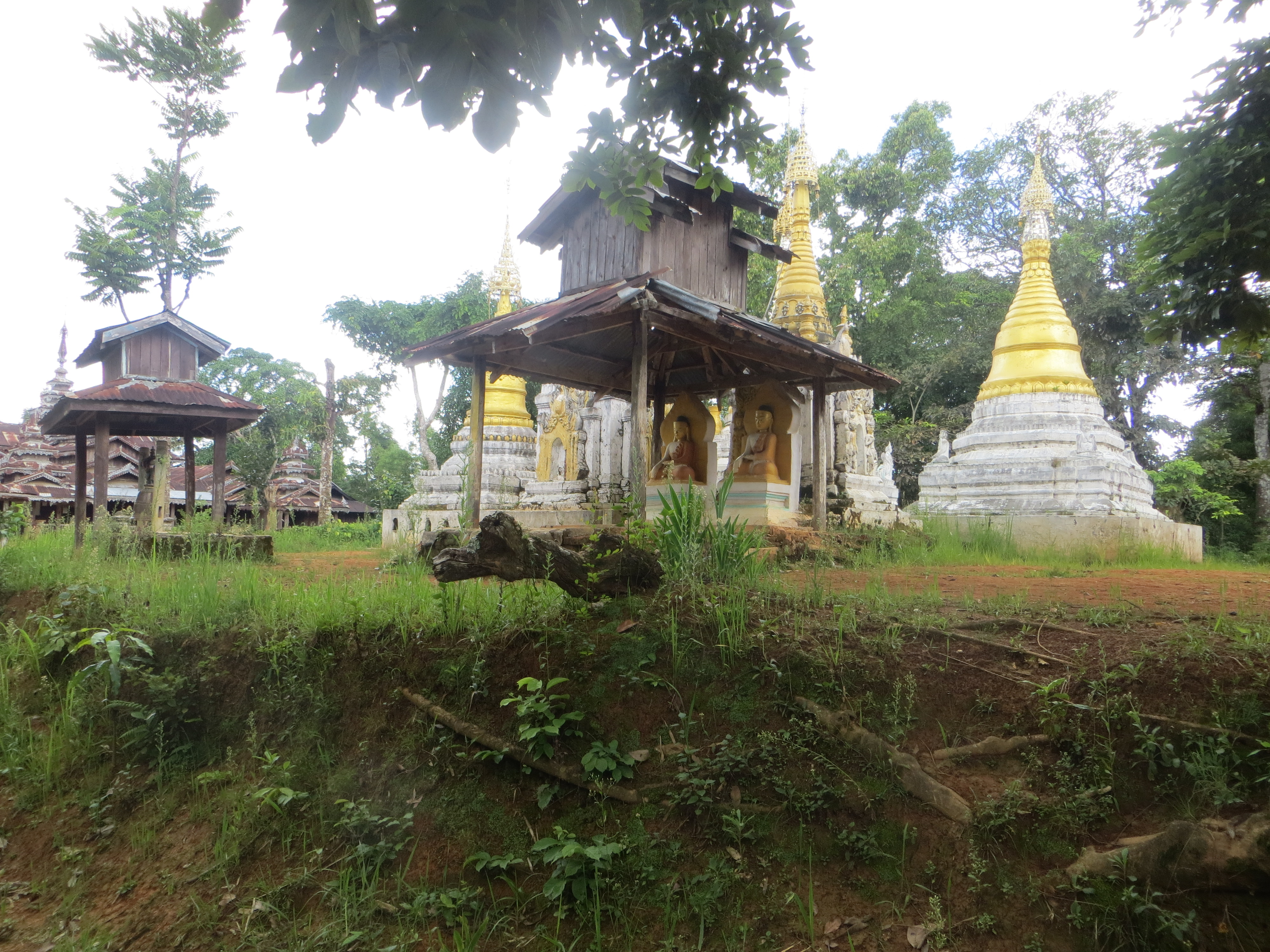
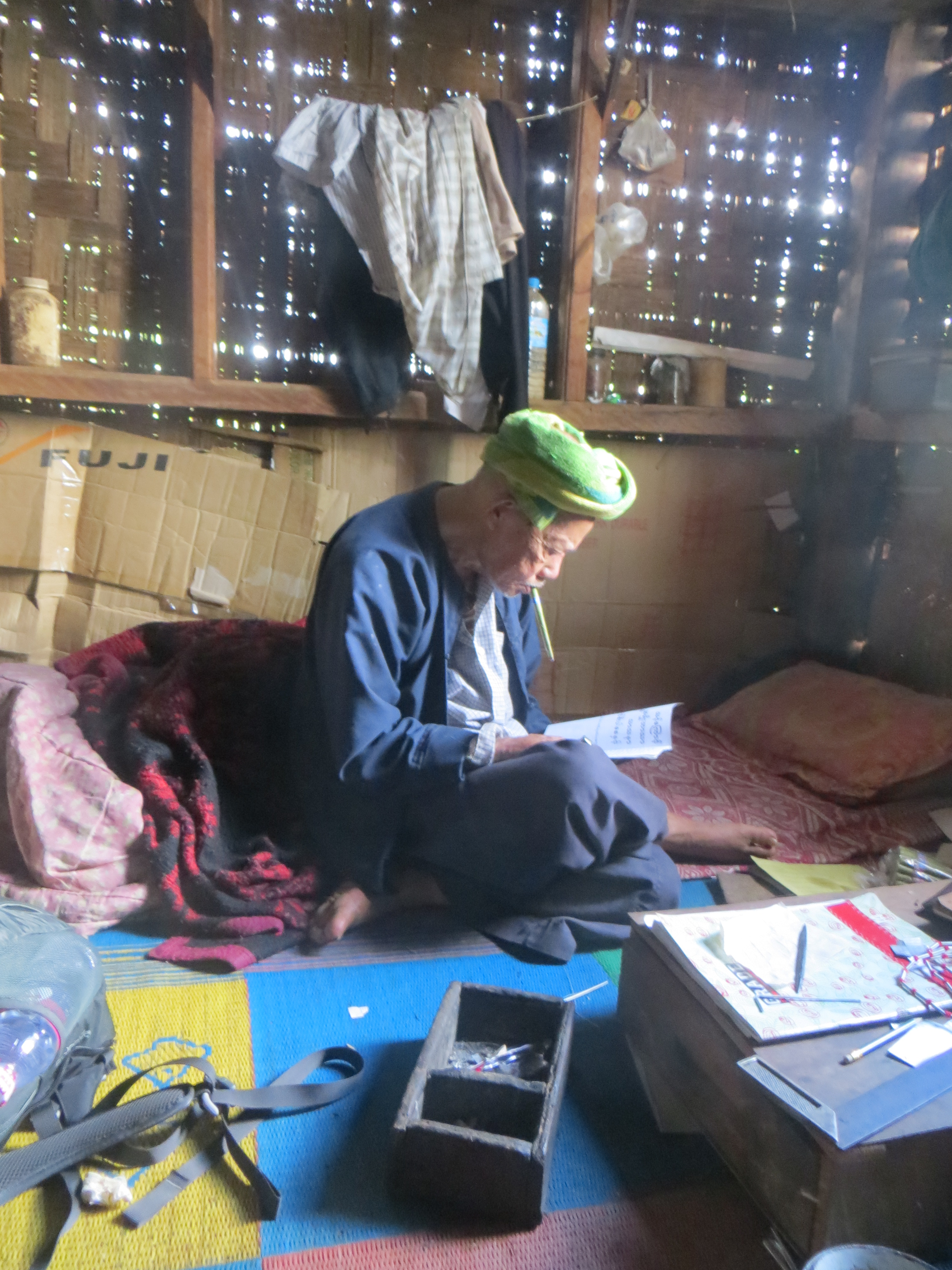
U Chai, the medicine man
We stopped for lunch after about 4 hours of trekking in the small village of Pau Tin Gone (10 km south of Kali) at the home of U Chai, a very elderly medicine man of the Pao ethnic group. He has studied the art of homeopathic and eastern medicines his whole life. It is apparently something of a lost art, for he is the only person for hundreds of miles in any direction trained in such mystical medical care. People travel from far and wide to learn and be healed by U Chai. In youth, he garnered fame for killing 3 Bengal tigers (on 3 separate occasions) with no gun, so the legend goes.
We ate a simple lunch and then sampled several of U Chai’s concoctions, including one anti-malarial supplement that we later found out contained traces of marijuana and opium (not much though). This news prompted Brian to ask “how many of these should I take for a good time.” Mr. Robin chuckled and shook his head and said, “shall we continue the trek?” Yes, lets.
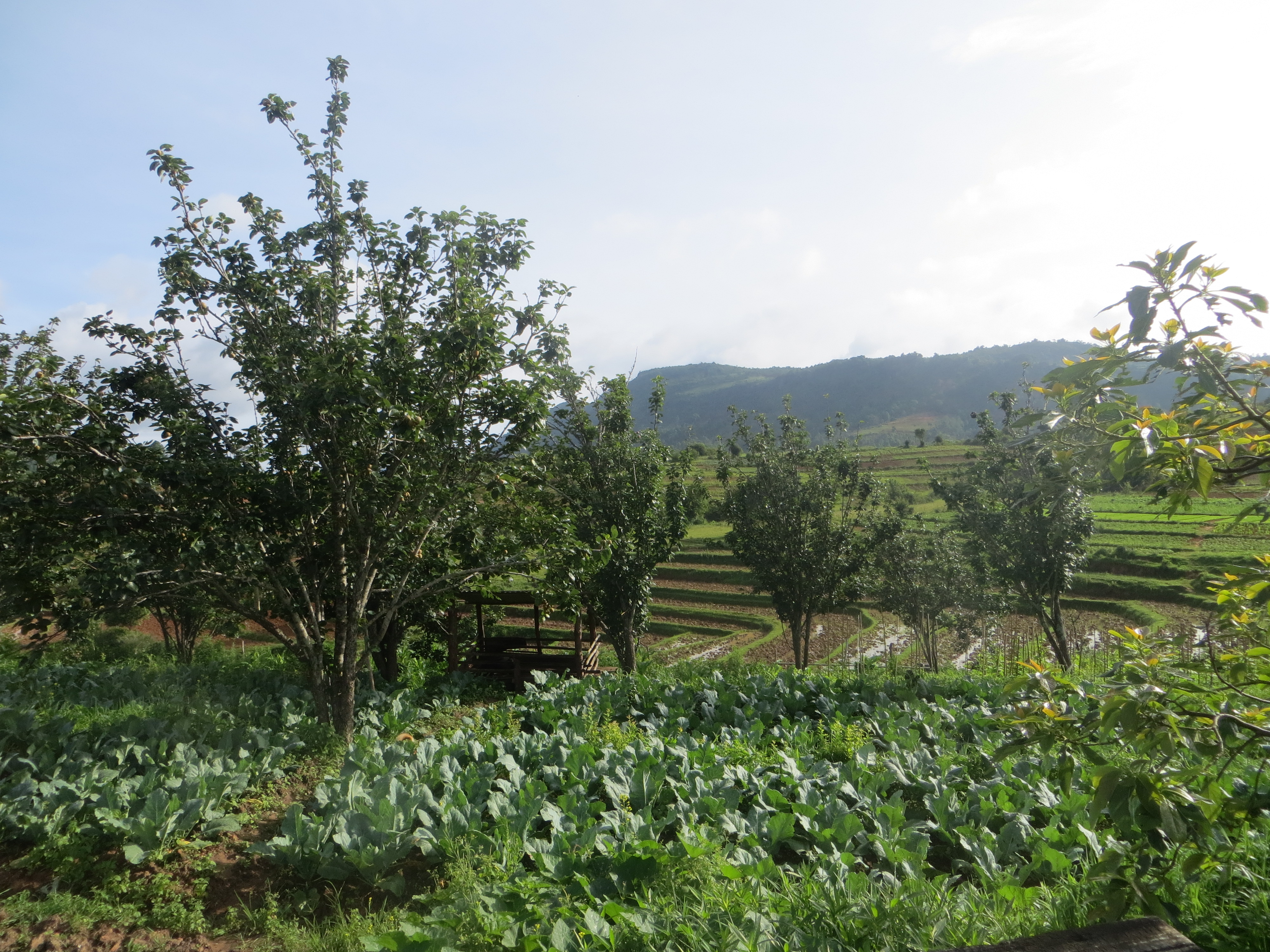
view from our homestay in Ywar Pu
That evening around 5:30 we stopped in Ywar Pu for the night. In the middle of vast farmland, the view from our homestay was spectacular. We took bucket showers, cracked open a few Myanmar Lagers and sat down to a delicious dinner. Our chef traveled by motorbike to each place we stopped to cook for us. Mr. Robin warned us not to give the chef any alcohol if we wanted our breakfast in time the next morning.
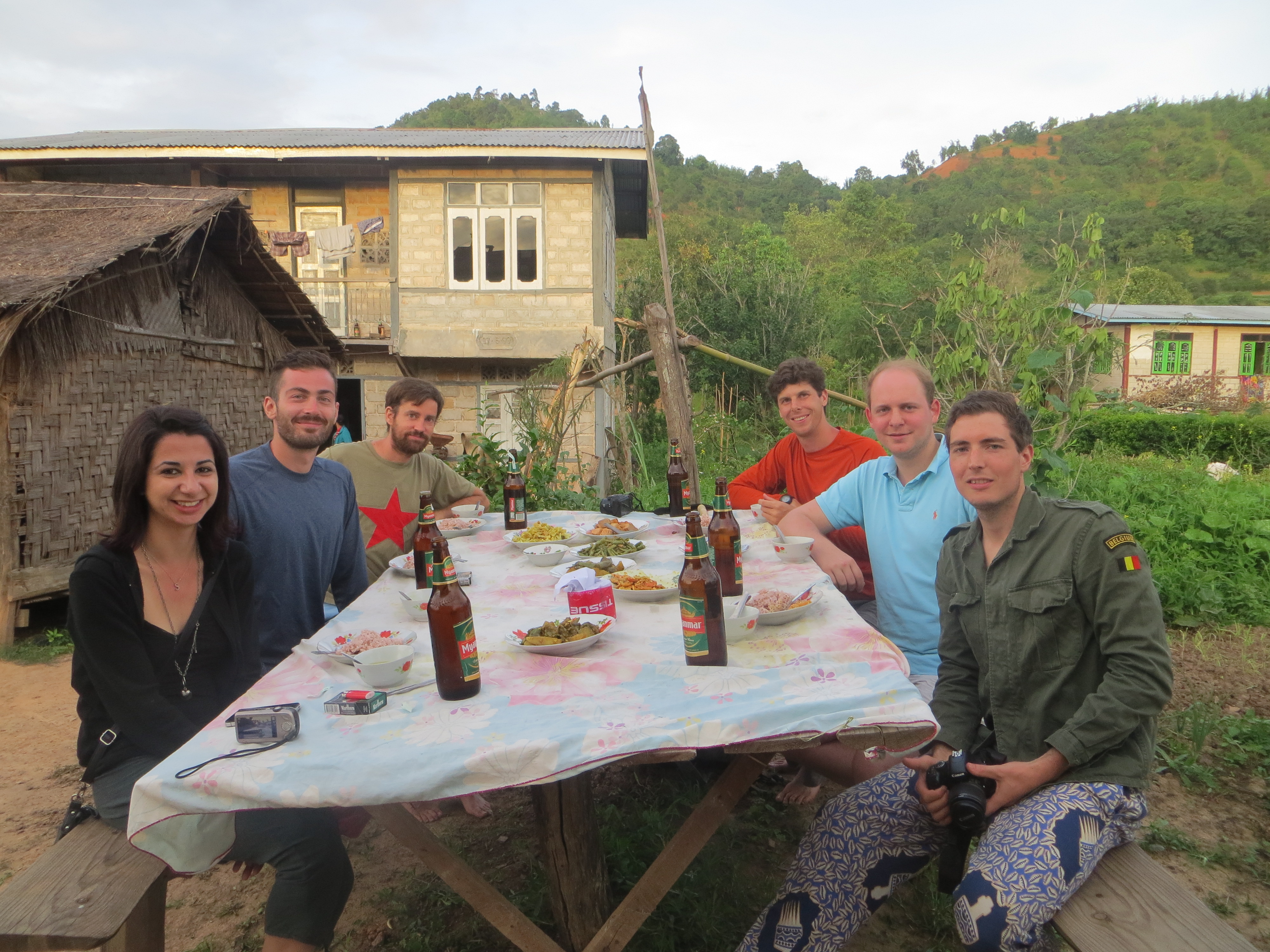
dinner after the first day of the trek (pictured from left to right: Sara, me, Brian, David, Jon, Paul)
Throughout the night I was tormented by mosquitos, yet somehow no one else was bothered. My companions were much amused when I brought this to their attention at breakfast. Brian told us that Kings used to have their servants cover themselves with honey and sleep nearby so they would attract all the mosquitos. A lingering silence followed this anecdote. Then Brian said, “so it’s kind of like you’re the servant and the rest of us are Kings.” Happy to help, I guess.
The second day we trekked 23 km. We knew we had major ground to cover so we were moving. We stopped in the village of Pin Nwae to visit an elderly weaver, a friend of Robin’s, named Ma May. She served us green tea and salted nuts as we watched her weave multicolored scarves. She was very kind and summoned her family for picture time.
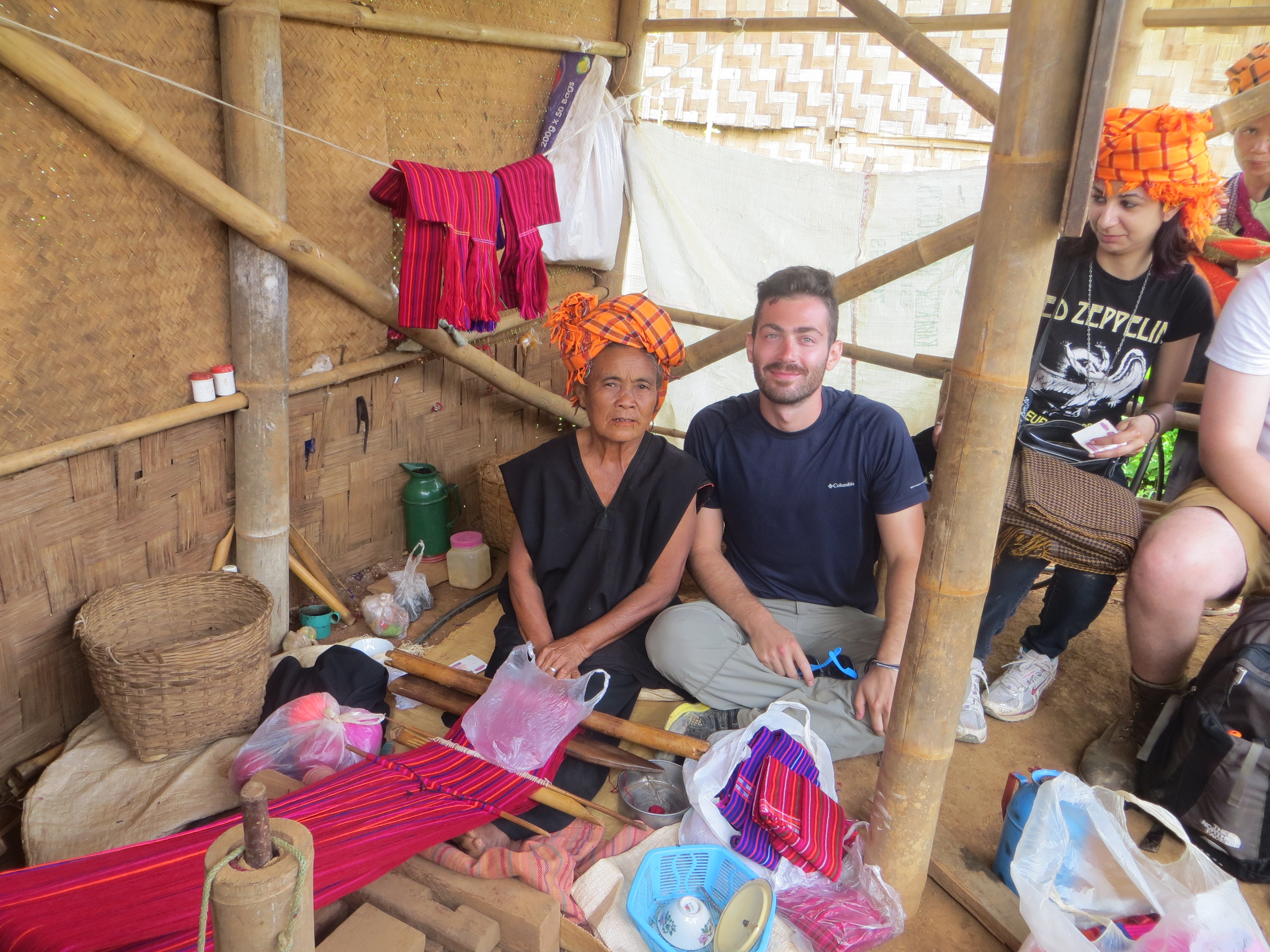
me and Ma May
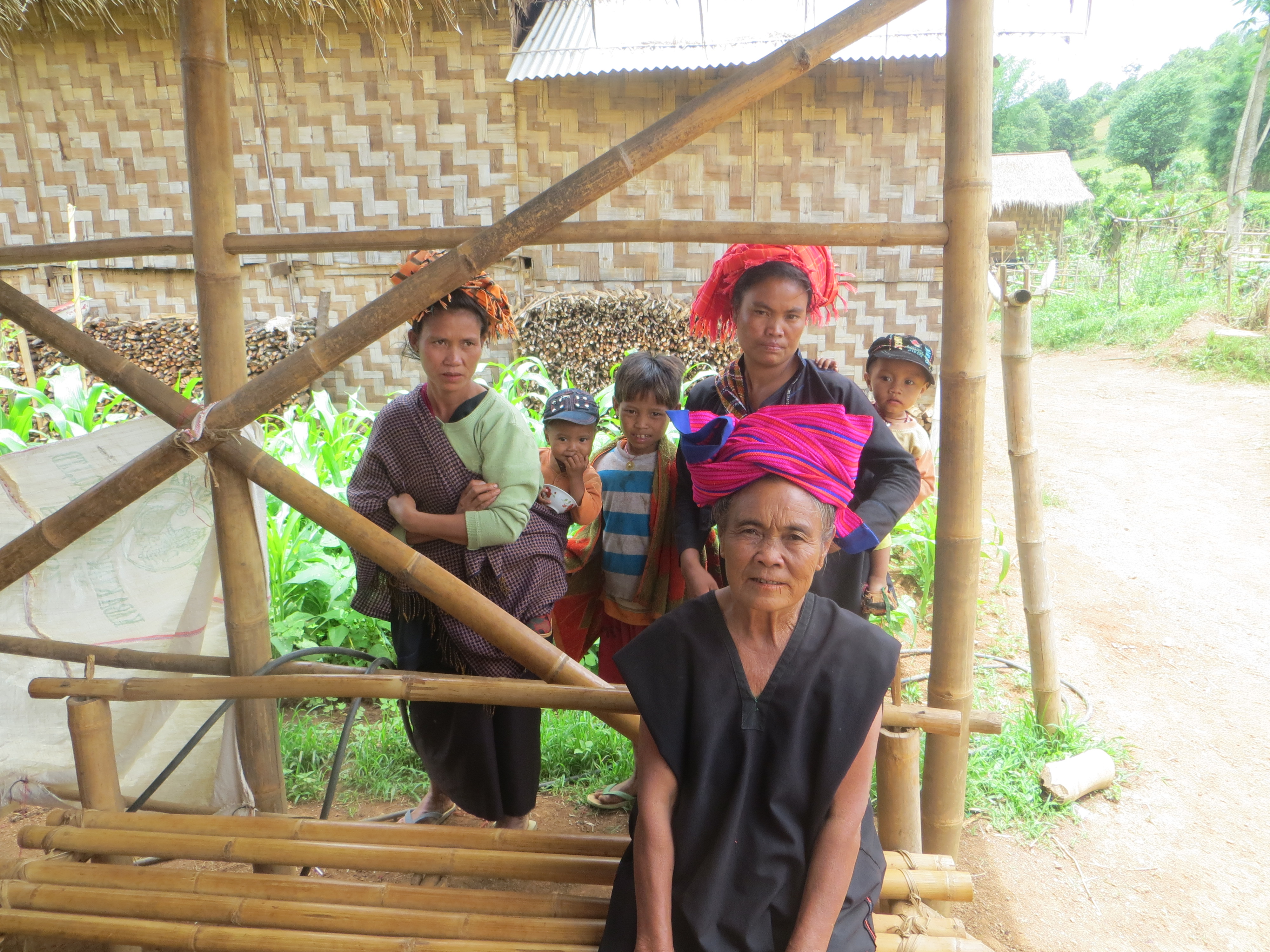
Ma May and her family
Throughout the day Mr. Robin stopped often to explain various plant life, to pick fruit for us to sample, and to regale us with information about Burma’s current political climate. He possessed an astounding wealth of information. I know he’s been doing this for 20 years, but his knowledge of hidden paths, the land’s multifaceted ecological complexion, and the complexities of local agricultural engineering efforts was constantly impressive to me. More astounding was his knowledge of local government dealings and world affairs. Though Burma has taken baby steps toward a civilian government, in reality it is still very much a militarized police state where the flow of information is fiercely filtered by the government. When I asked how he was privy to so much information he said that he owned a short-wave radio and listened to BBC in his home, but never dared to listen on the street or speak about it in public for fear of government spies.
We also learned that although Burma is extremely rich in natural resources (namely oil, natural gas, and precious stones), its people live in poverty because of unspeakable greed from the government’s upper echelon (shock of shocks). According to Forbes, Burma is the world’s third most corrupt country, trailing only North Korea and Somalia.
Education, you might imagine, isn’t accessible to everyone, especially poor or rurally based families. Mr. Robin spends about 30,000 kyat a month for each of his kid’s education.
The opium trade is still a big business in Burma, and in several regions is facilitated (both directly and indirectly) by the military. This is in part why much of Burma is closed to visitors of any kind.
I had just come from India and stopped in Amritsar to see the Golden Temple. This is holiest place on earth for Sikh people, their Mecca, and a place Mr. Robin has dreamed about since his youth. I told him about being there but felt quite sad afterwards. I hadn’t known anything about it until a few days before I’d visited. It had been kind of a “well, it’s on the way” sort of stop. He’ll never get to see it. Locals leaving Burma, even briefly, incur an enormous tax to purchase a passport, something that Mr. Robin will never be able to afford. Very, very sad.
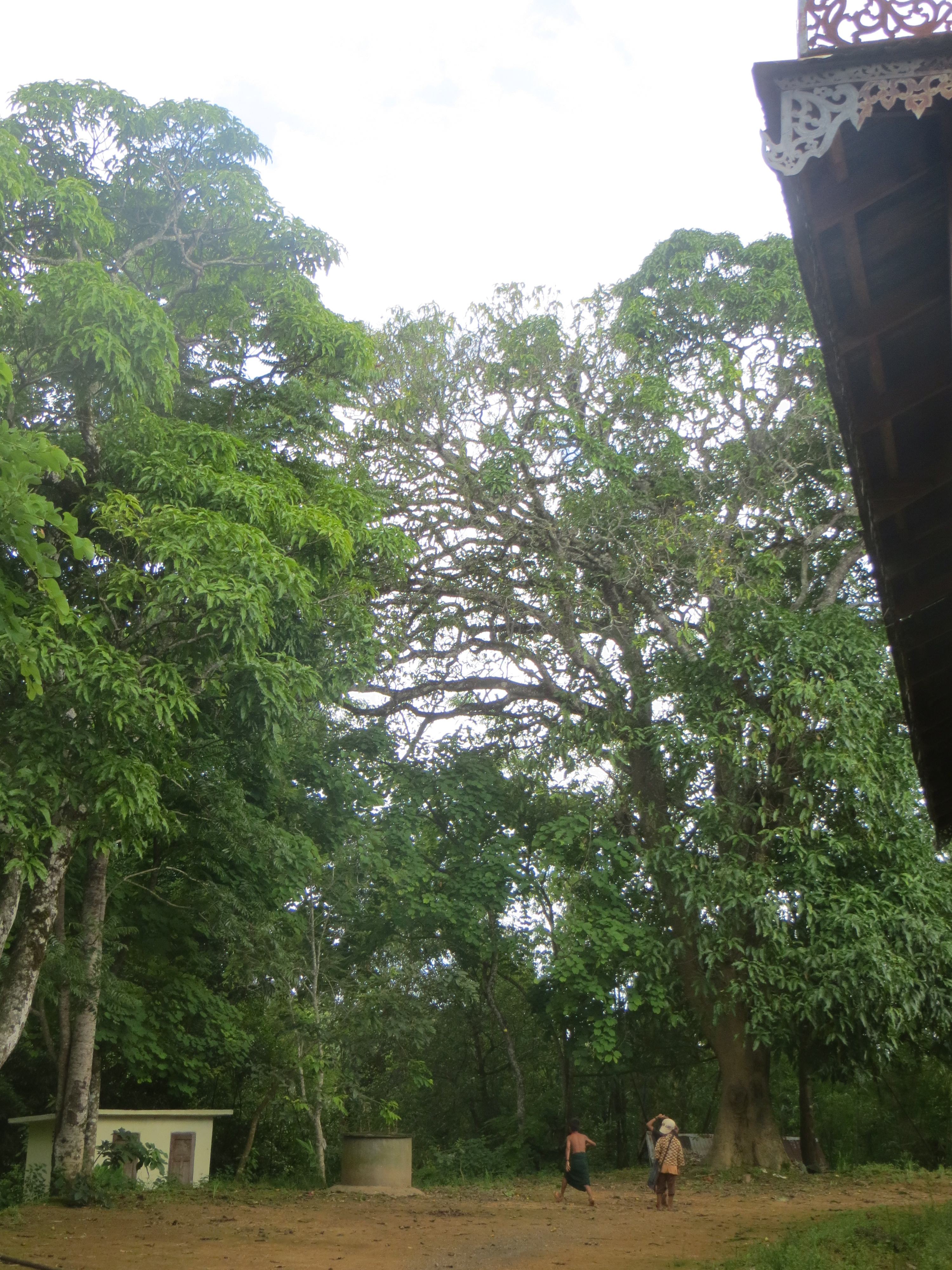
shaking out the mangos
We came upon a few kids gathered around a tall mango tree, and looked up to see a kid who had climbed to the very top and was shaking the branches. The less brave kids on the ground collected the mangos and brought them to us as we walked by.
Mr. Robin seemed to be quite a popular man. Not only was he amicable with every passer by, but everyone seemed to know him and want to help him or us in some way, by offering us bananas, tea, handicrafts made by their families, etc. It was quite touching.
At one point Mr. Robin found a bush with citrus peppercorns. These peppercorns are plucked and dried in the sun for days before they can be used as “table pepper.” We tried some and it changed the rest of the trek. They numb your mouth in a powerful yet incredibly pleasant way, so much so that your gums and tongue tingle and vibrate. It’s awesome. We were sucking those things for the rest of the trek.
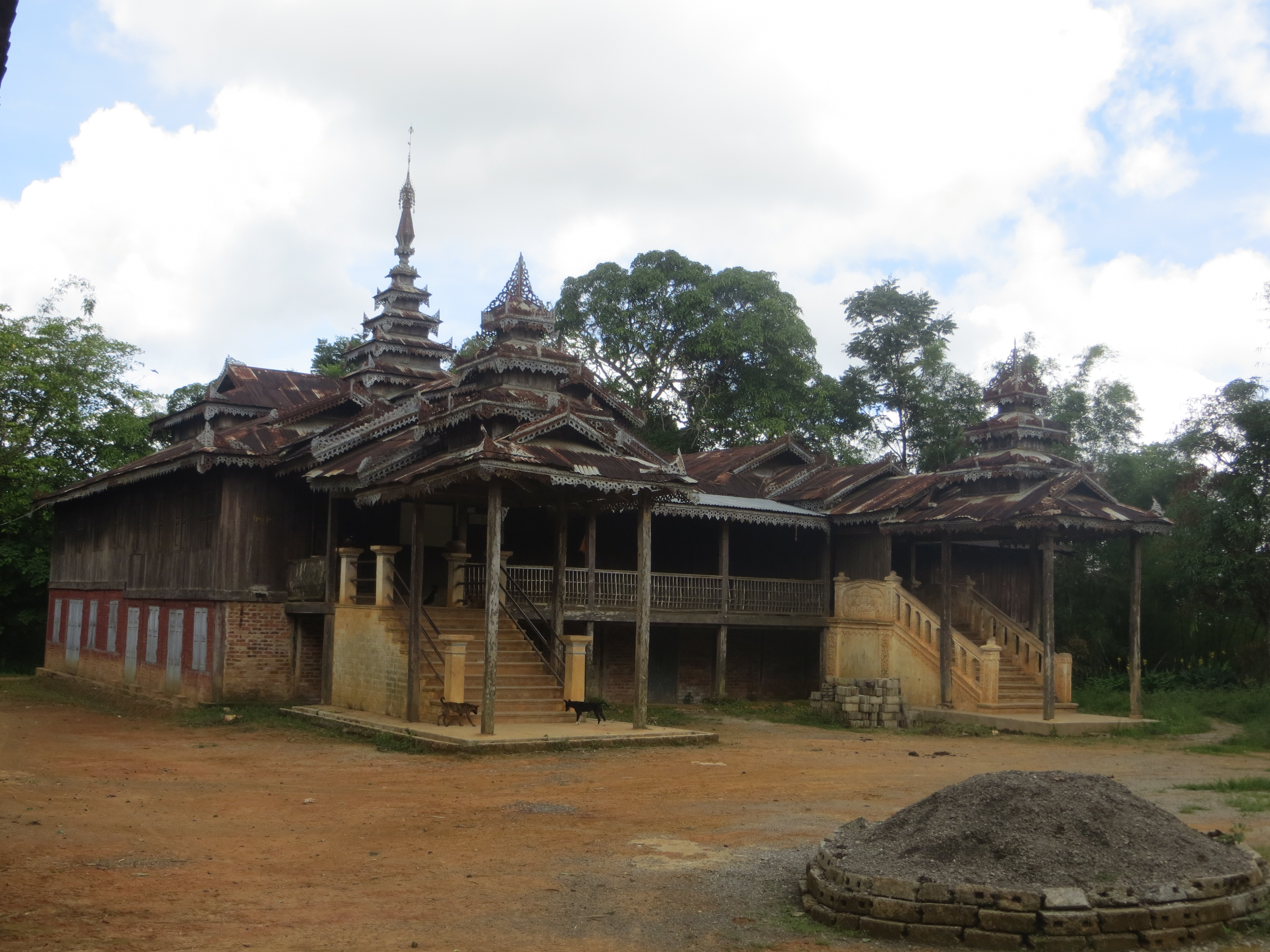 That evening we stayed in a monastery in the middle of the jungle. We slept in a large room with mats laid side by side, and a table lay in the corner for our meals. After bucket showers we bought drinks at a store nearby and made mojitos with mint we’d picked during the trek. Delicious. Our chef prepared an unspeakable amount of food that left us all feeling about 4 months pregnant afterwards.
We were up drinking for a while. There were a couple of other people, not in our group, who were sleeping in the same room. Brian was being very loud and despite our persistent efforts to quiet him he continued to retort that “they can sleep when they’re dead.”
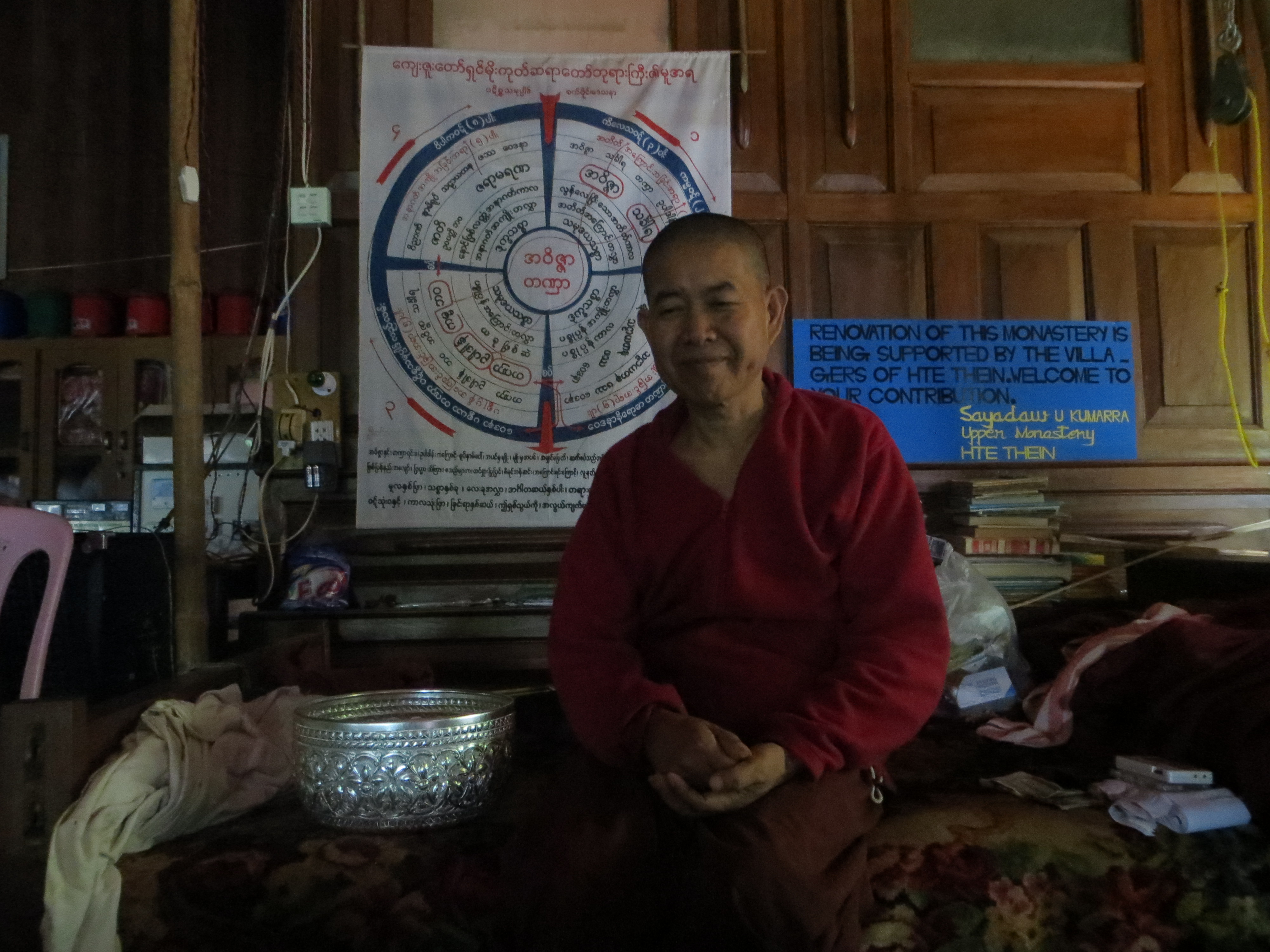 The next morning we met the only monk living fulltime in the monastery. He had just had a stroke and was bedridden. Still, he spoke with us for a time (translated by Mr. Robin) and blessed us before we set off on the final day of the trek.
We began hiking through light rain which subsided after not very long. 21 km lay ahead of us, and the trek was beginning to take its toll. My legs were a bit sore, as were my shoulders and back from carrying a heavy bag, but the worst were my badly blistered feet. Nothing is more important during a trek than the protection of one’s feet, for pain in this region is felt with each step. It’s quite hard to think of anything else when the friction caused by walking makes the inside of your shoe feel like sandpaper against open wounds.
At last we spotted Inle Lake in the distance, the promised land. We stopped around 1pm for lunch, then said goodbye to Mr. Robin and our chef before hopping on a boat bound for Nyaungshwe where most of our belongings had been sent.
I should note that the entire cost of this 3-day trek, per person, came to 30,000 kyat, which is $30 or $10 a day (multiplied by 6 trekkers comes to $180 total). This money paid to fuel our chef’s motorbike, for all of the food we ate (7 large meals), 2 nights of accommodation, entry into certain restricted regions (thus necessitating bribes), and the chef’s wages. What was left went to Mr. Robin, a man in his 60’s who treks 60 km in flip flops twice a week. I felt very guilty, as did others in our group, for negotiating such a low price before the trek began. For a wizened, grizzled, veteran to receive such a low wage for such physically intensive work seemed to me wholly unfair. Needless to say he was tipped handsomely. We all took a picture together before saying goodbye.
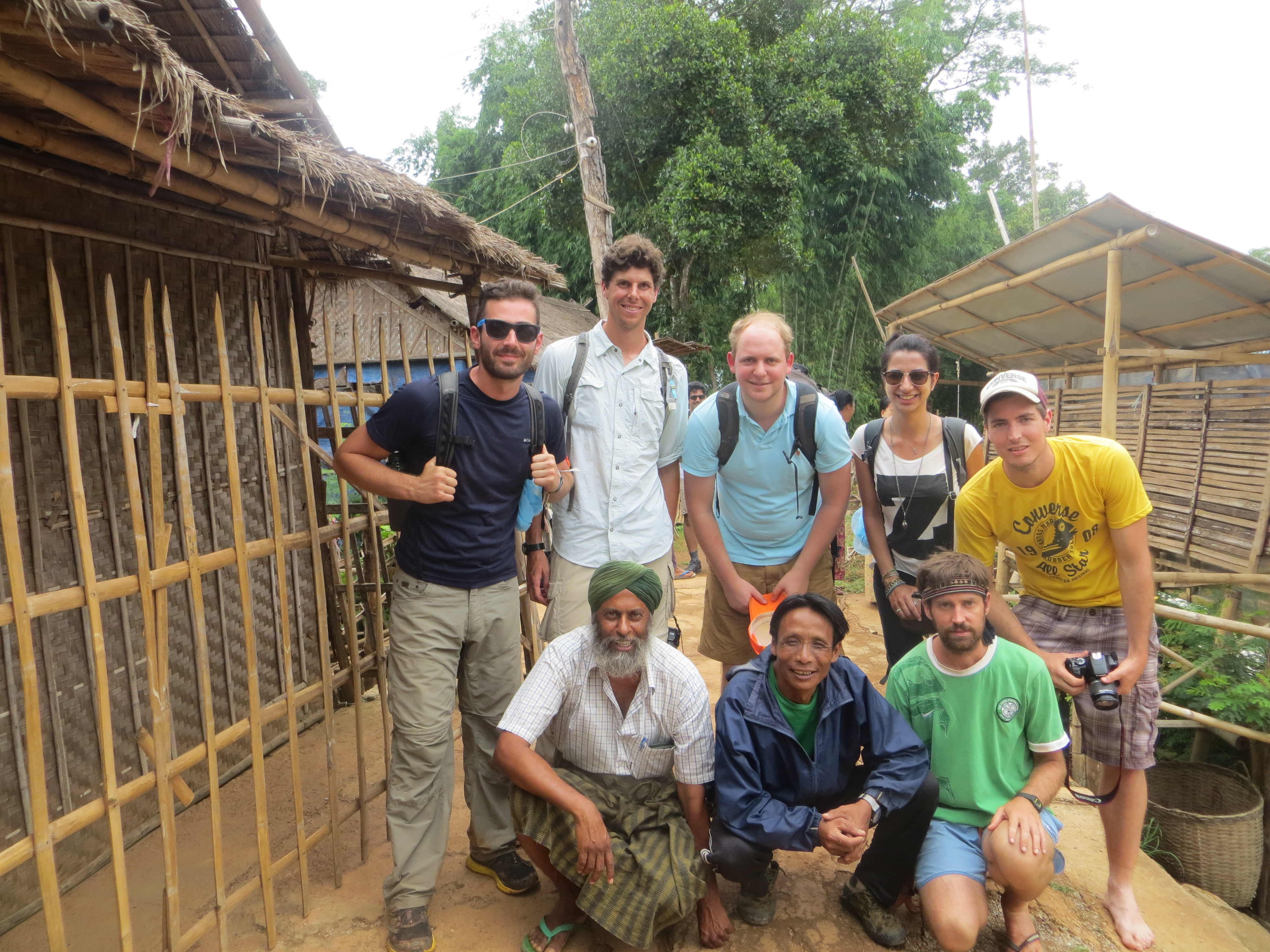
top from left to right: me, David, Jon, Sara, Paul
bottom from left to right: Mr. Robin, master chef, Brian
After bidding farewell, Mr. Robin hopped on the back of the chef’s motorbike, and headed back to Kalaw to meet a new group of trekkers leaving the following morning. The six of us hopped on a boat for a 90 minute ride across Inle Lake to Nyaungshwe.
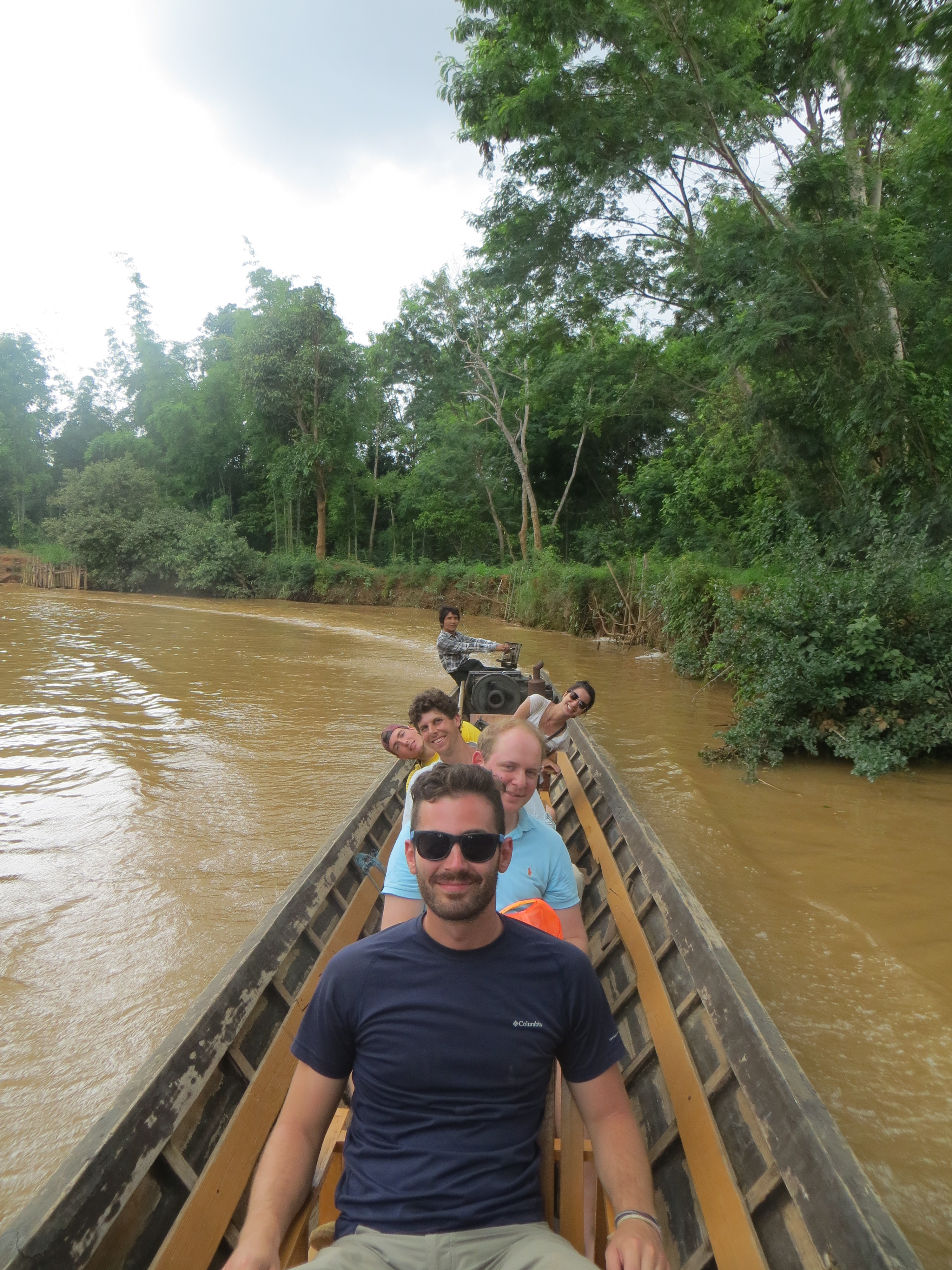
on the boat to Nyaungshwe


 milesawayfromhome

Nancy Riemer
August 1, 2013
heartrendering re: Mr Robin. May he be blessed and experience profound joy. Thank you for writing about this. I get a real sense of the place, culture, people, government (rapists). what a journey!
practicalmeg
August 6, 2013
Great post!Thanks for all the travel tips, they were very helpful for my trip to Burma/Myanmar. Keep up the good work!