Mingalaba,
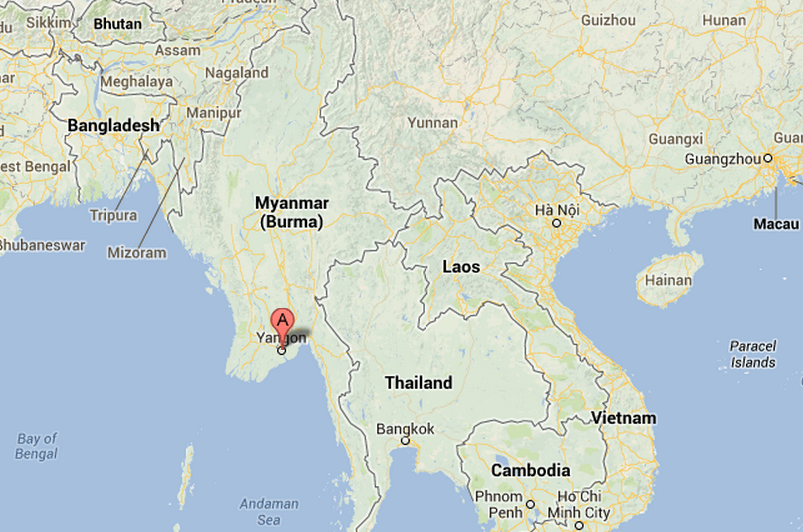
my current whereabouts
I write to you on a gray humid morning from a café in central Yangon, the largest city and former capitol of Burma (Myanmar). Sitting to my right, legs crossed to the left, is my friend Sara who not long ago was my neighbor in Brooklyn. She decided to leave her job and, before moving across the country to the Frisco Bay, has bravely opted to rendezvous with yours truly for adventures through Burma and the Thai islands. In a few hours we’re taking a 12 hour bus to Bagan, so before this likely unpleasant journey I wanted to tell you, my loyal readers, about Yangon.
If India, China, and Thailand had a three-way, Yangon would be their child. A succession of greedy, power-hungry Kings presided over centuries of war (where have I heard this before?) ultimately leaving Burma weak and easy prey for the British. When Britain first controlled Burma they considered it to simply be an extension of India, and thus encouraged a rush of Indian immigrants across the vanquished border. Since I’ve just come from India, it is remarkable to me how parts of Yangon feel just like it – the smells, food stands, the people, the architecture, etc. There’s also a large Chinatown area, and Thai culture can be found all over the city, I’ve even spotted framed portraits of the King.
Sara and I are staying in a moldy, windowless coffin at the Mahabandoola Guest House. I like the room but Sara, to put it mildly, does not. She’ll get over it. After putting our bags down around 6pm we tilted back our first Myanmar Lagers in a pub filled with Indian men who stared at us through each sip. Next we hopped in a taxi to the Shwedagon Paya, easily the most magnificent stupa in Burma.

Shwedagon Paya
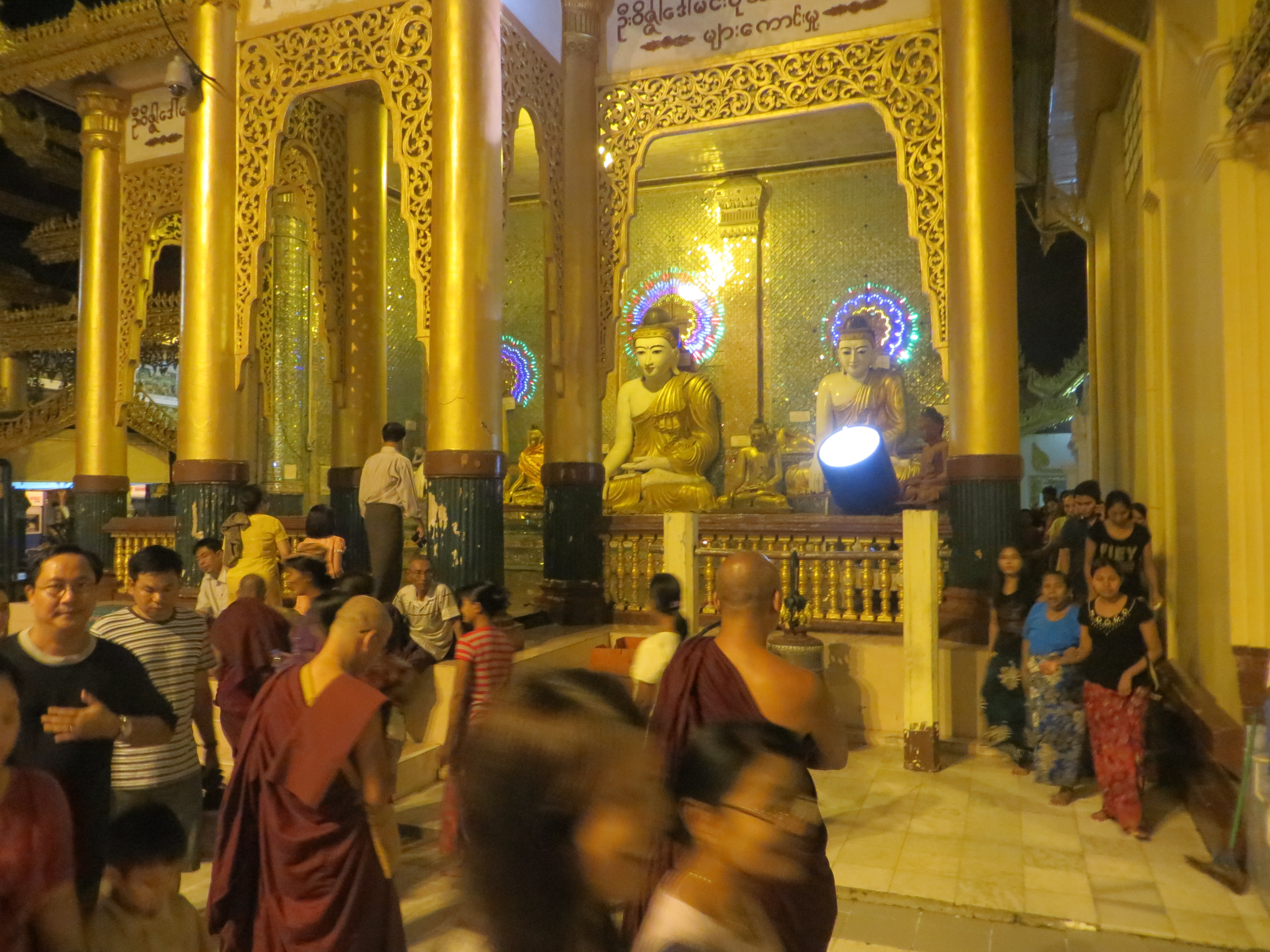 Walking on the marble path clockwise around the stupa is not unlike the walkway at the Golden Temple in Amritsar, India. It is a deeply spiritual experience where monks and pilgrims congregate after lengthy journeys. Myriad alters, zedis, and shrines for the Buddha surround the massive golden structure, each Buddha is haloed with flashing neon lights.
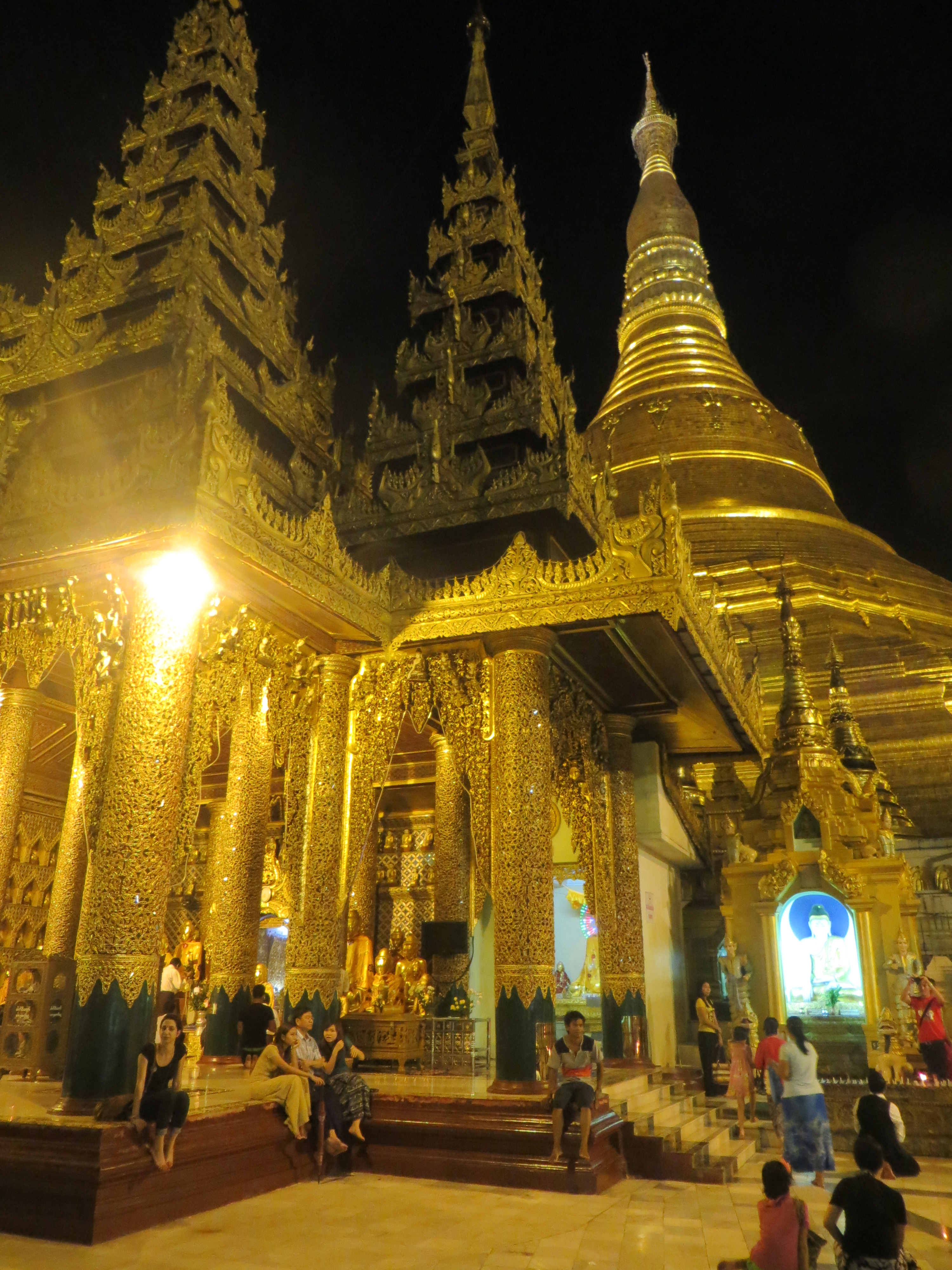
In Burma, one must make efforts to spread one’s money around so as not to directly fund the regime, but avoiding this altogether requires untangling the cosmic web of business ownership and is ultimately impossible. At Shwedagon Paya, Sara and I paid a $10 entry fee for foreigns, which I’m confident goes straight to the government.
We met up with my friend Kevin our first morning in Yangon, ate some delicious Shan noodles, stopped by a café to use their wifi, then took a long walk around Kandawgyi Lake.
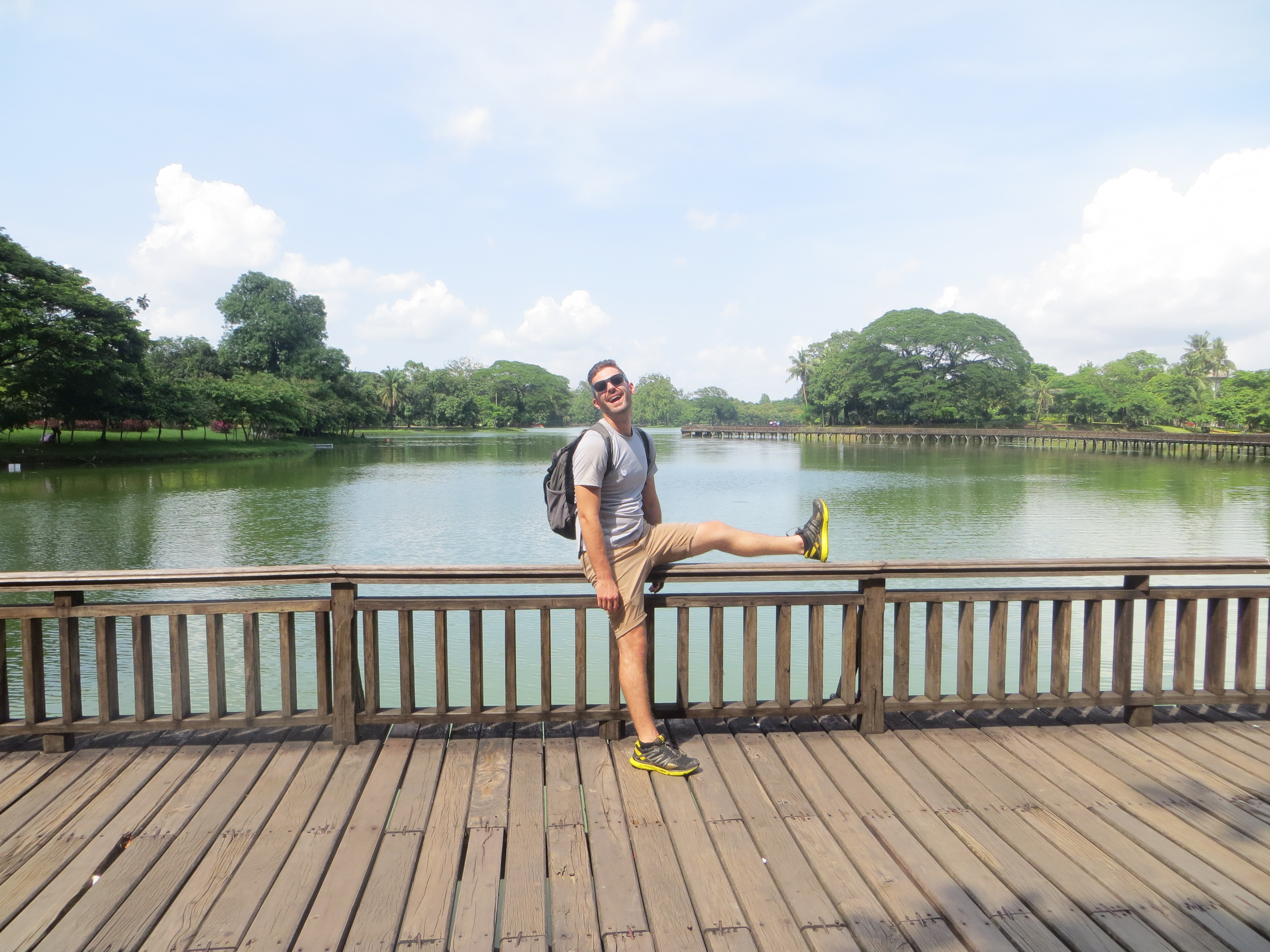
Kandawgyi Lake
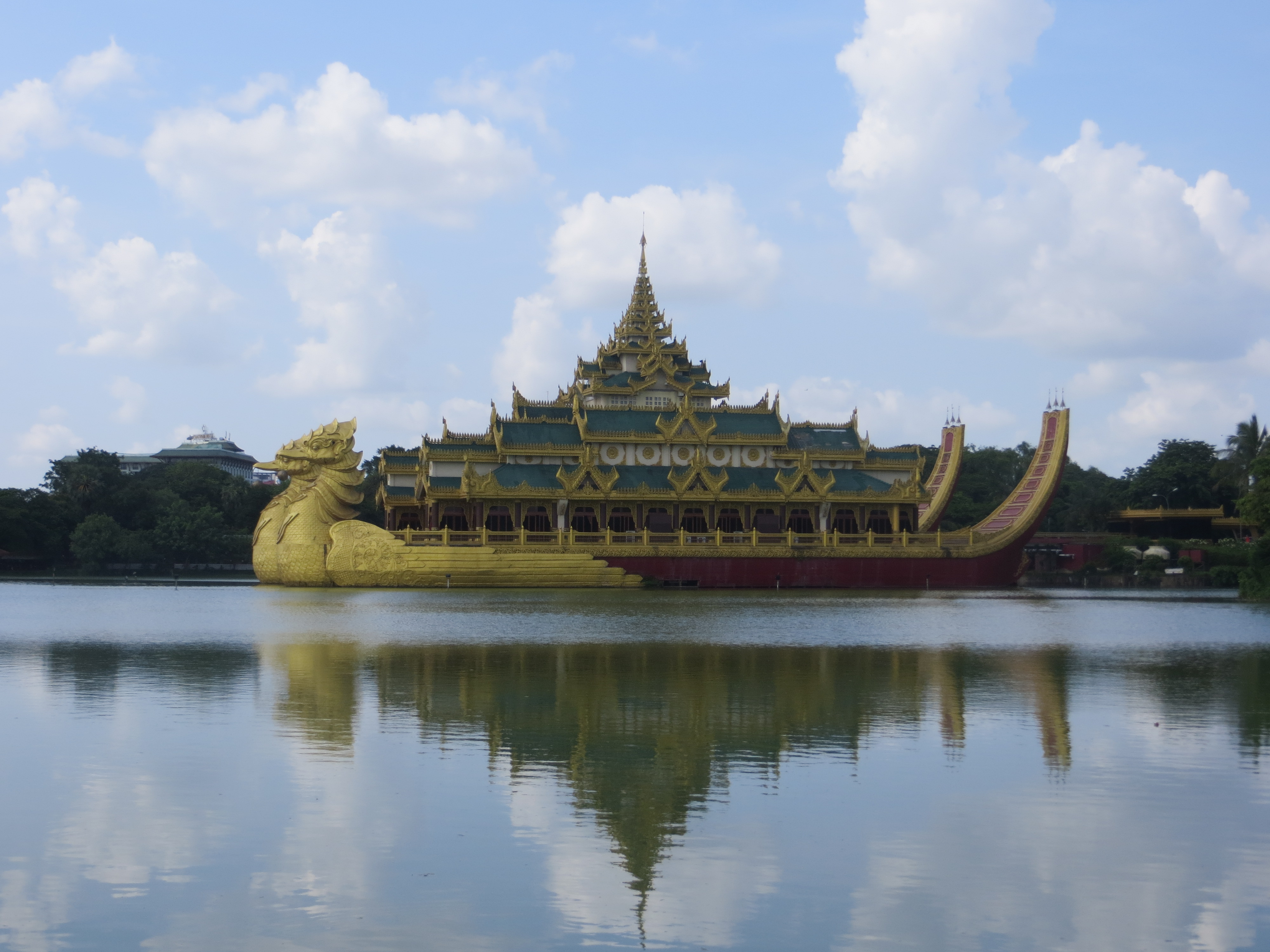
Kandawgyi Lake
After a long sweaty walk we proceeded to order drinks at each of the fanciest venues in Yangon, including the Hitachi building’s rooftop Sky Bistro, and the famous colonial era Strand Hotel. At the Strand I played a 200+ year old piano before ordering a glass of port and a platter of smoked salmon – going for the authentic Burmese experience.

Playing an 18th century piano at the Strand Hotel
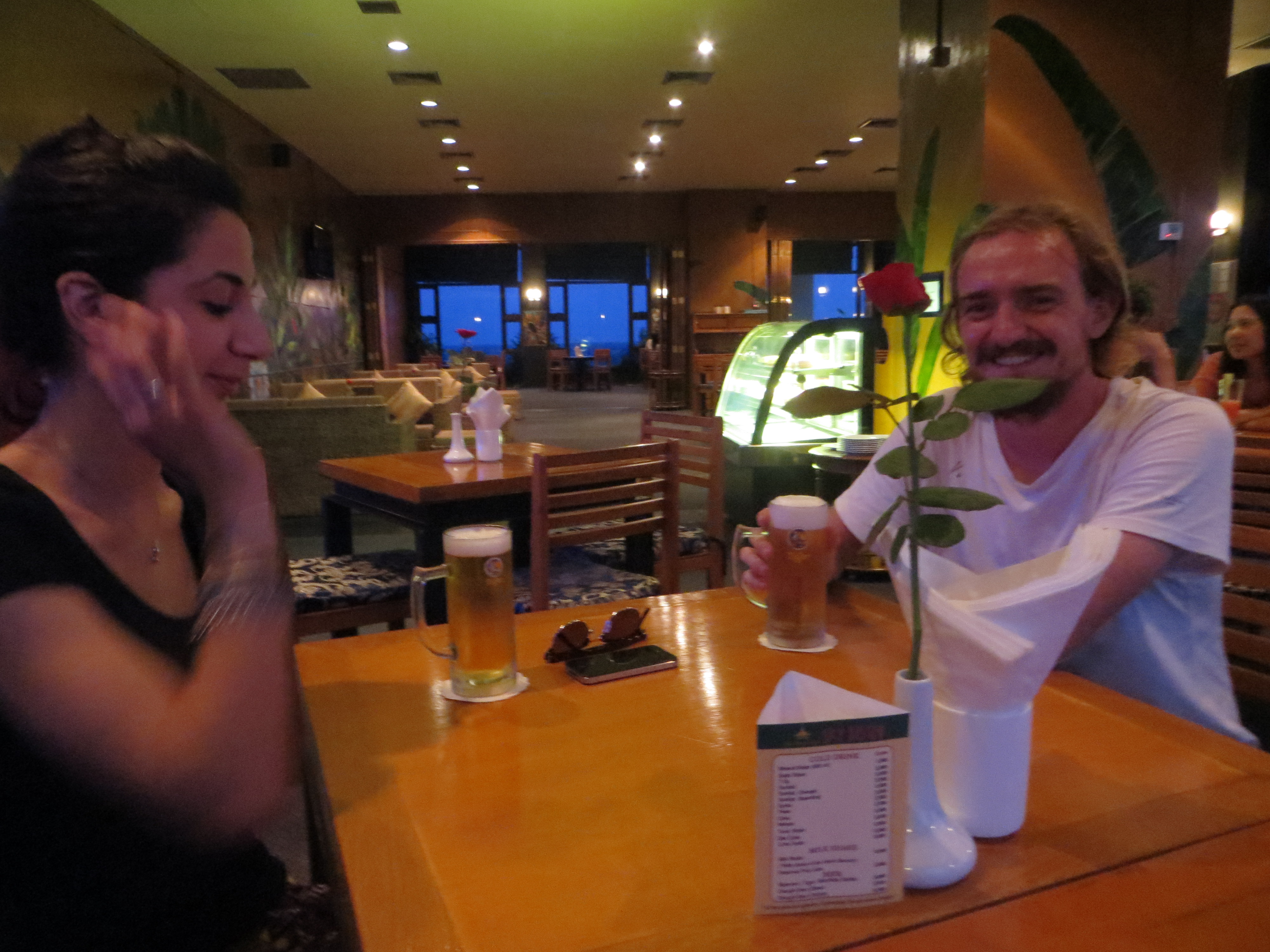
Sky Bistro (Sara to the left, Kevin to the right)
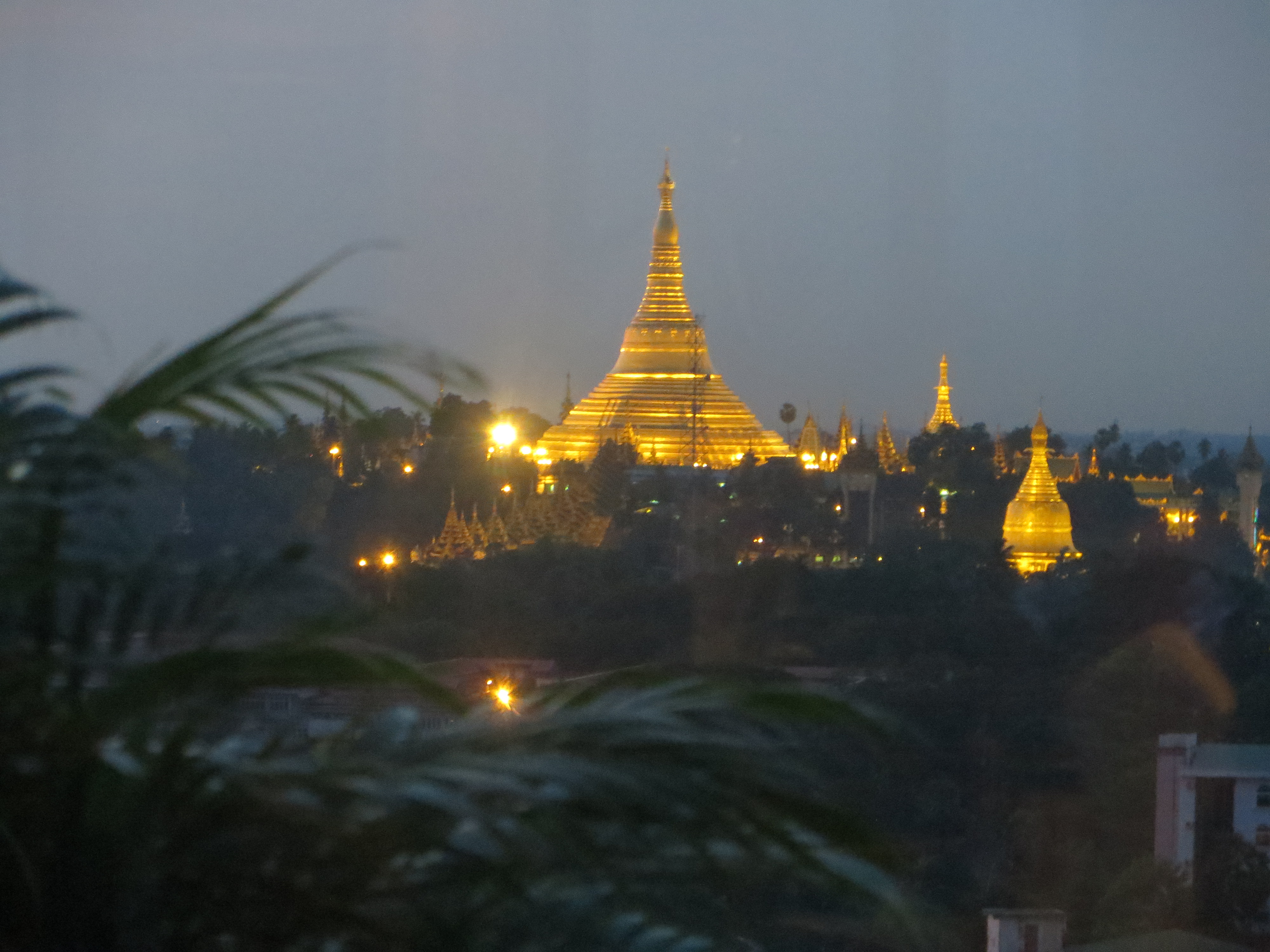
view of Shwedagon Paya from Sky Bistro
The next day Sara and I took a 3 hour train that looped through the suburbs and villages of Yangon. The train ticket cost $1. The coach was very basic, yet was clearly designated for tourists or phalang (foreigners) only. A guard posted himself by the doorway I believe to prevent teenagers coming on board to bother us. Keeping tourists happy is a top priority here, there are even signs posted around town reminding locals to treat tourists well. When I showed interest in picking up a snack during one of our 10 second stops, the guard ushered me back onto the train before I had a chance to buy any food, but on the next stop he took it upon himself to buy Sara and I a small bag of tofu and chili sauce. He offered it to us and said “thank you” when we accepted. Easily the most adorable security guard I’ve ever encountered.
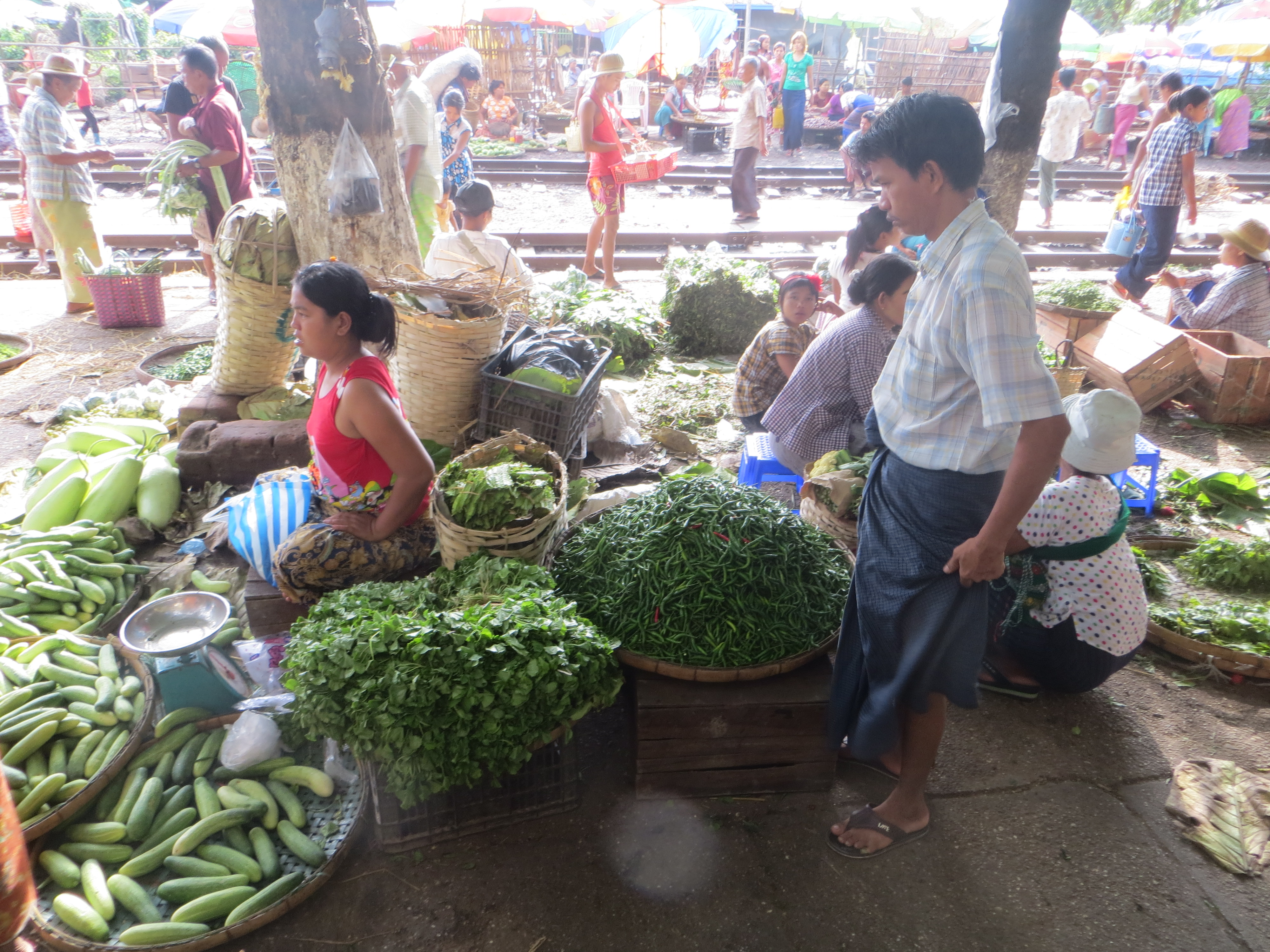
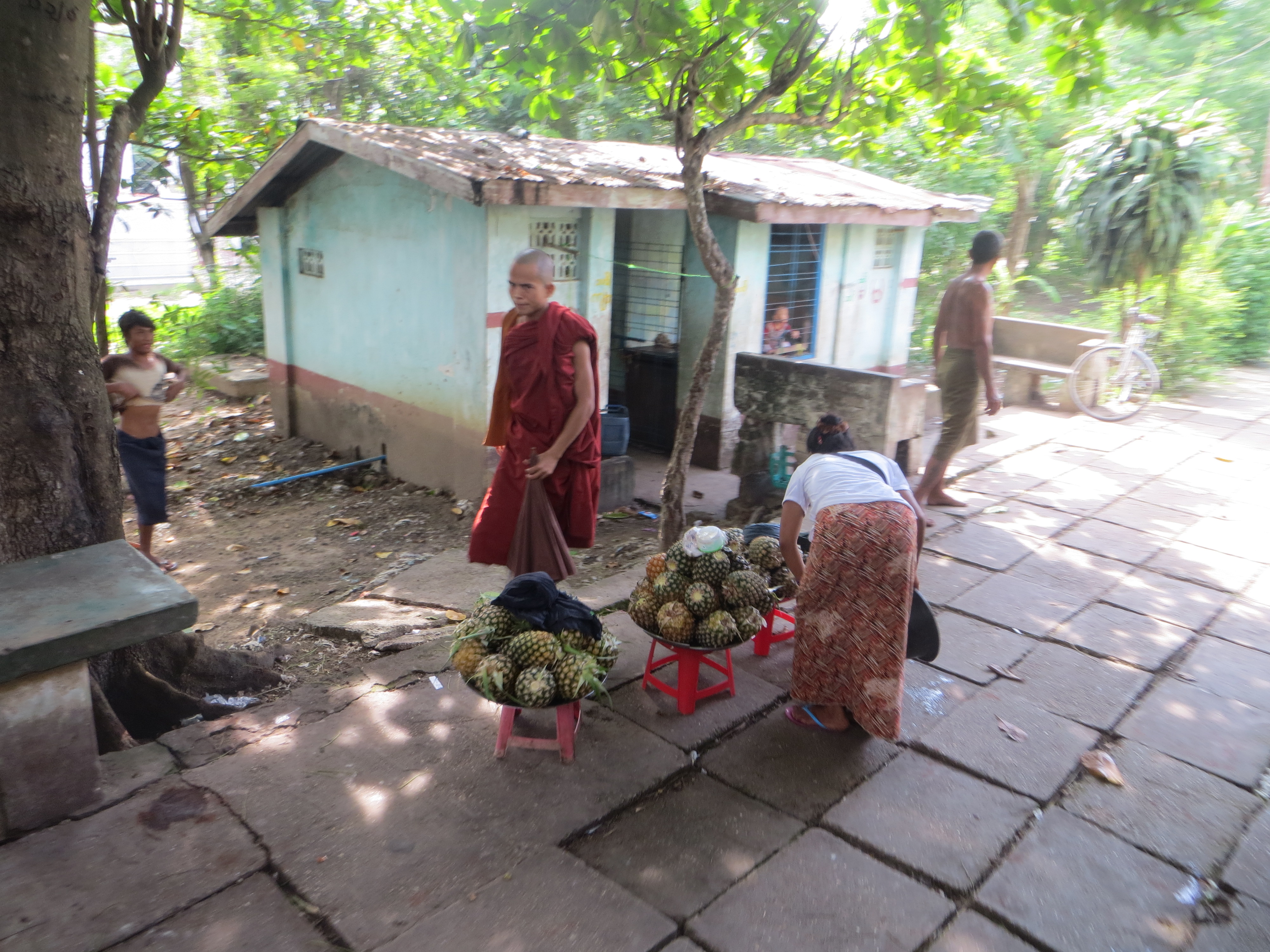
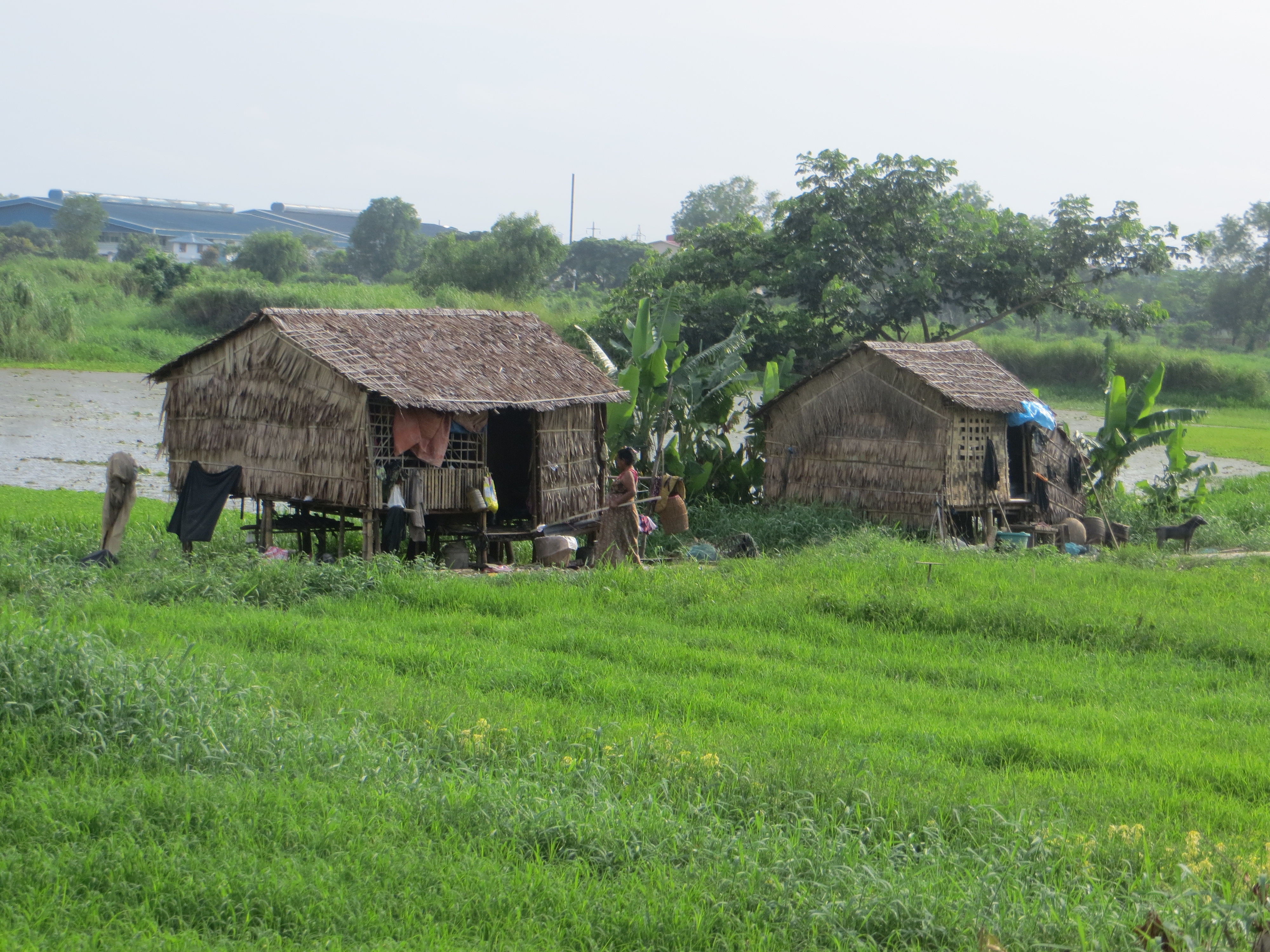
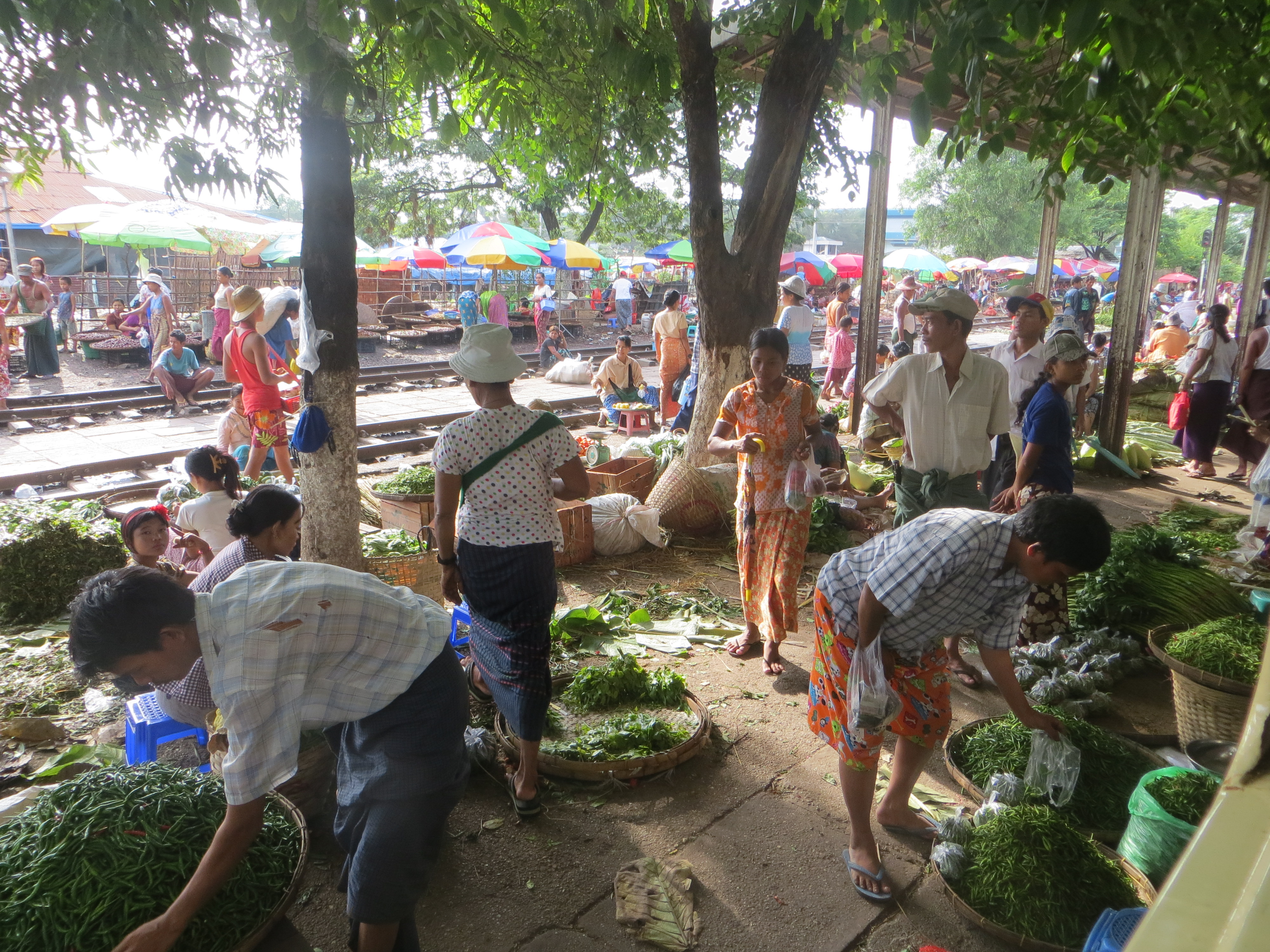
The train ambled slowly through Yangon’s suburbs and hutted communities, yet the journey seemed to fly by as we gazed at the endless rice paddies and trackside markets. I enjoyed locking eyes with various locals, each of who immediately returned a smile, radiant with the joy that comes from such a natural, albeit momentary, connection with someone far removed from their culture and lifestyle. It was an enlivening experience. It’s the sort of thing that gives me hope about the world, a hope that has become jaded at times over the course my time in New York, and even in the early stages of my travels as my local interactions were often limited to the tourist-tout dynamic.
That evening we enjoyed a tasty noodle dish with egg drop soup in Chinatown, then headed to the 50th Street Bar & Grill, a true expat pub, for a few drinks. The following morning I had to get a chest x-ray for my Australian work visa since I spent a few months in South Africa not so long ago. Guide books offer stern warnings against making use of Burmese health care, but this place wasn’t so bad. Though for a place with modern medical technology they only accepted cash.
Later, Sara and I spent a few hours in a wifi café where we were joined by Kevin once more as we sipped café mochas and then a couple of beers. At around 5pm we said goodbye to Kevin, then took a shuttle to a bus bound for Bagan. On the 12 hour bus ride Sara and I watched “Searching For Sugarman” which was one of the best documentaries I’ve ever seen. I highly recommend it.
Next stop: Bagan!


 milesawayfromhome
Posted on July 2, 2013
0